
Pricing Guide

Cheapest Credit Card Processing: What It Really Costs

Why the lowest advertised rate is rarely the cheapest option — and how to find the one that is

The cheapest credit card processing is not the provider with the lowest headline rate — it is the one with the lowest effective rate after every fee on your monthly statement is counted. Many merchants switch for a lower advertised percentage and end up paying more once monthly minimums, PCI fees, batch fees, and equipment leases are added. This guide compares the main pricing models, shows the hidden costs to look for, and explains how zero-fee processing can bring your processing bill close to zero.

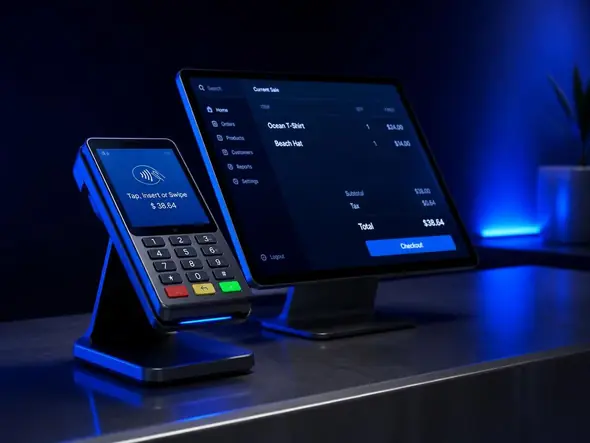
Countertop POS terminal accepting a card payment

Advertised rate vs. effective rate

Your effective rate is total processing fees divided by total card sales for the month. It is the only fair way to compare credit card processing costs between providers. A processor quoting 1.9% can easily land at an effective rate above 3% once add-on fees are included, while an honest quote at a higher headline rate may cost less overall.

  • Add up every fee on your last statement, not just the percentage
  • Divide by total card volume to get your effective rate
  • Compare providers on effective rate, never on the advertised rate alone

Comparing pricing models: which is cheapest?

Flat-rate pricing is simple and predictable, and it often suits very small or new businesses, but it becomes expensive as volume grows. Interchange-plus pricing passes the card networks' true cost through with a small, fixed markup and is usually the cheapest traditional model for established merchants. Tiered pricing groups transactions into 'qualified' and 'non-qualified' buckets and is usually the most expensive and least transparent. Zero-fee (cash discount) processing is structurally different: a small disclosed adjustment at checkout offsets processing costs, so the merchant's own processing bill can drop close to zero.

Worked example: $30,000 a month in card sales

Here is how the same business can pay very different amounts. These are illustrative numbers — your statement will differ by card mix and average ticket.

  • Flat rate at 2.9% + $0.30 on 1,000 transactions: about $1,170 per month (3.9% effective)
  • Interchange-plus at roughly 2.2% interchange + 0.3% markup + $0.10: about $850 per month (2.8% effective)
  • Tiered pricing with non-qualified surcharges and $60 in add-on fees: often $1,000+ per month
  • Zero-fee (cash discount) program: card adjustments collected at checkout offset most processing cost; the merchant typically pays only a flat software or gateway fee

Hidden fees that make 'cheap' processing expensive

The lowest-cost credit card processing depends as much on what's left out of a quote as what's in it. Before signing, ask for a written list of every recurring and one-time fee.

  • Monthly minimums and statement fees
  • PCI compliance or non-compliance fees
  • Batch, gateway, and per-authorization fees
  • Long equipment leases that cost far more than buying a terminal
  • Early termination fees and automatic contract renewals

When zero-fee processing is the cheapest option

For businesses with steady card volume, a compliant cash discount or zero-fee program is often the lowest-cost way to accept cards, because the processing cost is covered at checkout rather than deducted from your deposits. It fits restaurants, retail, service businesses, and B2B invoicing especially well. Note that a cash discount (posting a card price and discounting cash) is permitted in all 50 states, while a surcharge (adding a fee to credit cards) is capped by card networks, not allowed on debit cards, and restricted in some states. Clear signage and receipt disclosure are required for both, and Tasskel Pay charges a flat $25 monthly fee for unlimited processing. Rules change, so confirm current requirements — see our surcharging rules guide.

How to get the cheapest rate for your business

Start with your last one to three months of statements, calculate your effective rate, and request quotes that itemize every fee. Then compare interchange-plus and zero-fee options side by side using real volume. Tasskel Pay offers a free statement review and a savings calculator so you can see the difference before you switch.

  • Gather recent merchant statements
  • Calculate your current effective rate
  • Request itemized quotes with no hidden fees
  • Model zero-fee savings with the savings calculator

Pricing models compared at a glance

Illustrative example: $30,000/month card volume, 1,000 transactions. Actual costs vary by card mix.
Pricing modelHow you payEst. monthly costBest for
Flat rateSame % + fixed fee on every sale~$1,170 (3.9%)Very low or new volume
TieredQualified / mid / non-qualified buckets$1,000+ (varies)Rarely the cheapest
Interchange-plusTrue network cost + fixed markup~$850 (2.8%)Established merchants
Zero-fee (cash discount)Disclosed checkout adjustment offsets costTasskel Pay: a flat $25 monthly fee for unlimited processingSteady card volume

Reviewed by Tasskel Pay Payments Team, Merchant Services Specialists · Last reviewed

Frequently asked questions

What is the cheapest way to accept credit cards?

For most established businesses, a compliant zero-fee (cash discount) program or transparent interchange-plus pricing gives the lowest total cost. The right answer depends on your volume, average ticket, and customer mix.

Is flat-rate processing cheaper?

Flat-rate pricing is simple and can be cost-effective for very low volume, but it usually costs more than interchange-plus or zero-fee processing once monthly card sales grow.

What is a good effective rate for credit card processing?

Many small businesses on traditional pricing land between roughly 2.5% and 3.5%. Tasskel Pay charges no transaction fees and a flat $25 monthly fee for unlimited processing because transaction costs are offset at checkout.

How do I know if I'm overpaying?

Divide total monthly fees by total card sales. If the result is well above your quoted rate, or you see fees you don't recognize, you are likely overpaying. Tasskel Pay can review a statement for free.

Questions about this guide?

Tell us about your business and a Tasskel Pay specialist will reply within one business day.

Are You Ready to Get Started Today?

Complete your online merchant application, keep 100% of your card sales, and unlock the full Tasskel business suite with your account.